1 · The molecule
You do not have to draw it. To use a SMILES string, press the editor's Open Structure button, the folder icon at the top left, and choose Paste from clipboard: it accepts SMILES and will draw the molecule for you.
2 · Run PharmCast
Nothing drawn yet? Load montelukast, a 586 Da drug that reaches every distance bin including the longest.
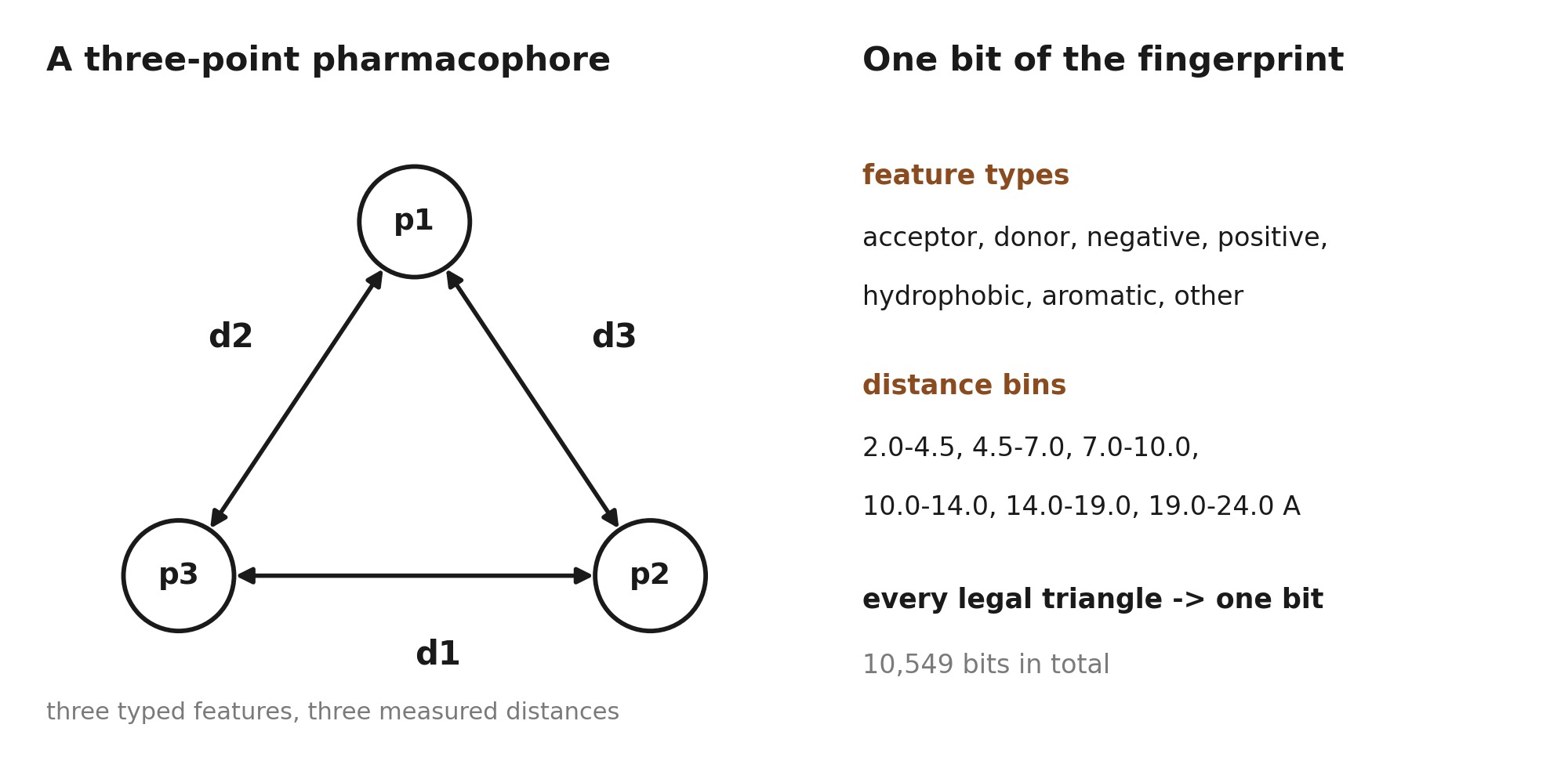
Every position in a pharmacophore fingerprint is a named, geometric thing: three typed features at three binned distances. That is why the hit list above reads as chemistry rather than as an opaque bit index, and why two molecules from unrelated scaffolds can set the same position. These are ensemble fingerprints, so a set pharmacophore means this molecule can present that triangle in some accessible conformation, not that it always does.
Method, measurements and the training corpora: pharmacophore fingerprints, explained. To compare two molecules rather than fingerprint one, use the compare page.